Place one monster on proven visitor traffic, test the result, and expand only after you can explain what changed.
Current monster answer
Place the first monster where visitor traffic already repeats
Start with a compact route and one controlled placement. This page separates a useful traffic test from guesses about exact catch rates or unverified monster statistics.
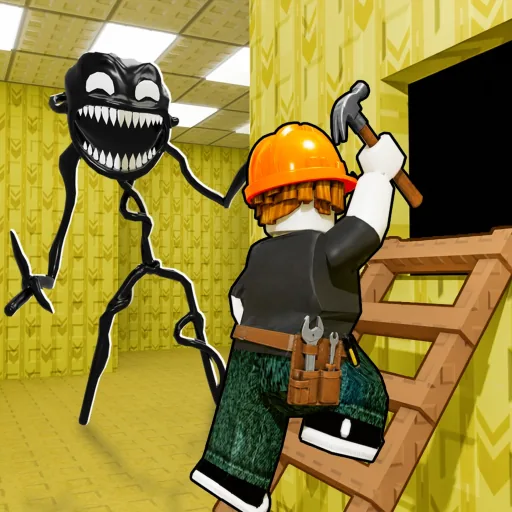
Official Roblox building thumbnail used as visual context; this is a placement framework, not a measured gameplay screenshot.
Placement test
5-step Build Your Backrooms monster placement test
A placement test should answer one question at a time. First prove that visitors use the route, then add one monster and watch whether the same traffic produces a repeatable result.
Step
What to check
What a pass looks like
1. Read the route
Build one compact path and observe where visitors actually move.
You can point to the main traffic lane without guessing.
2. Add one monster
Place a single monster beside proven traffic instead of decorating an empty room.
The change is isolated enough to retest.
3. Watch a repeat
Compare more than one visitor pass instead of trusting one lucky catch.
The same route and placement produce a recognizable pattern.
4. Check the cash loop
Confirm that visitors enter, move, and trigger the expected progression after the placement.
A slow run has a visible cause you can inspect.
5. Expand carefully
Change one branch or one placement at a time, then record the result.
You know which change helped or hurt the route.
Official Roblox building thumbnail used as visual context; this is a placement framework, not a measured gameplay screenshot.Traffic matrix
Where a monster belongs in a compact maze
Location
Use when
Avoid when
Main corridor
Visitors already pass through it repeatedly.
The corridor is only decorative and has no observed flow.
Turn or choke point
The route naturally concentrates movement there.
A new branch has not been tested yet.
Near an entrance
You are checking whether visitors enter and continue into the route.
The entrance is crowded and hides the rest of the path.
Side room
The side room connects to a proven path and you can observe the transition.
It is empty, isolated, or added only to fill space.
After an update
A UI, room, monster, or economy change may have shifted traffic.
You are relying on an old screenshot or copied claim.
Placement test
What this monster guide answers
The useful question is not simply which Backrooms monsters exist. For Build Your Backrooms players, the practical question is where one monster should sit so that a route test can be observed and repeated. The page therefore focuses on placement, visitor traffic, and retesting. It does not invent exact catch rates, upgrade prices, secret rewards, or offline earnings when those values are not supported by a repeatable check. That boundary matters because a broad Backrooms monster search also includes lore, films, and other games. A narrower game decision gives players something they can act on in the next run.
Placement test
Start with traffic, not decoration
A monster placed in an attractive but unused room cannot tell you much. Build one readable path first, let visitors move through it, and identify the corridor, turn, or entrance where movement is easiest to see. Then make one placement change. If the route is already too wide, simplify it before adding more monsters. A compact layout reduces the number of possible explanations when the run slows down. This is experience-based guidance for controlled testing, not a claim that every player will see identical behavior. The game may change, so the route should be checked again after visible updates.
Placement test
Separate route failure from monster failure
When a run performs poorly, do not immediately conclude that the monster is weak. Check the route in three passes: do visitors enter, do they reach the intended lane, and does the placement sit on that lane? If the first answer is no, the problem is likely the entrance or build shape. If visitors enter but split away, the branch may be diluting traffic. If the route is stable but the outcome changes, record the placement and retest before changing several pieces at once. One-variable changes are slower, but they produce evidence that can improve the guide and the wiki instead of creating another unverified build recipe.
Placement test
Use a controlled expansion loop
After one placement produces a recognizable pattern, expand only one part of the maze. Add a branch, move one monster, or change one connection, then observe the same checkpoints again. Keep the old route in mind so that the comparison is meaningful. If the new branch makes traffic harder to see, remove or simplify it rather than adding more decorations to compensate. The goal is not to publish a universal layout; it is to help players diagnose why their own layout works or stalls. A short record of what changed, where the monster was, and what happened is more useful than a screenshot with no context.
Placement test
What belongs in the wiki entry
A future monster wiki entry should capture the decision a player can make: where the monster was placed, which route was active, what visitor movement was observed, and when the check was made. It should label exact values as unverified until they can be reproduced. The existing wiki page remains the broad evidence map for rooms, buildings, visitors, cash, codes, and update fields. This page links back to that map because a placement note needs context, but it does not turn a single observation into a permanent game rule. Keep the wording specific enough that another player can repeat the setup.
Placement test
Retest after a visible update
Recheck monster placement when the Roblox description, thumbnail, in-game UI, room shape, visitor movement, or economy visibly changes. A traffic pattern from an older build may no longer describe the current route. The safest update note says what changed, which section is affected, and what still needs confirmation. Until the new result can be repeated, keep it in watch status rather than labeling it a guaranteed strategy. Players looking for a broad Backrooms monster list should use the page as game-specific placement guidance, then follow the official Roblox experience link for the current game surface.
Official game media
Three visual references for a monster-placement guide
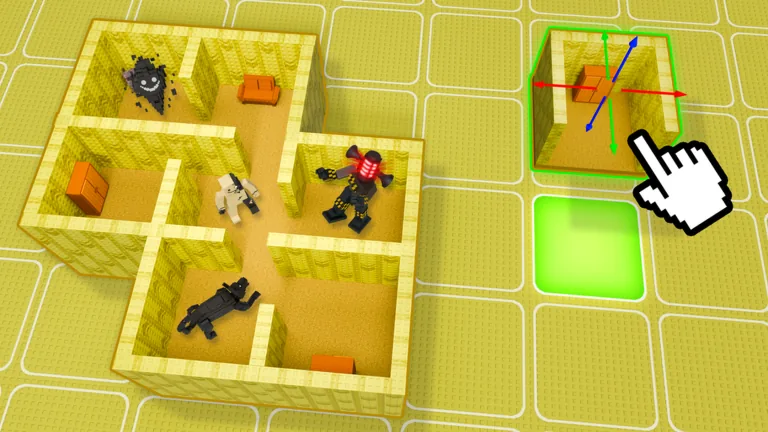
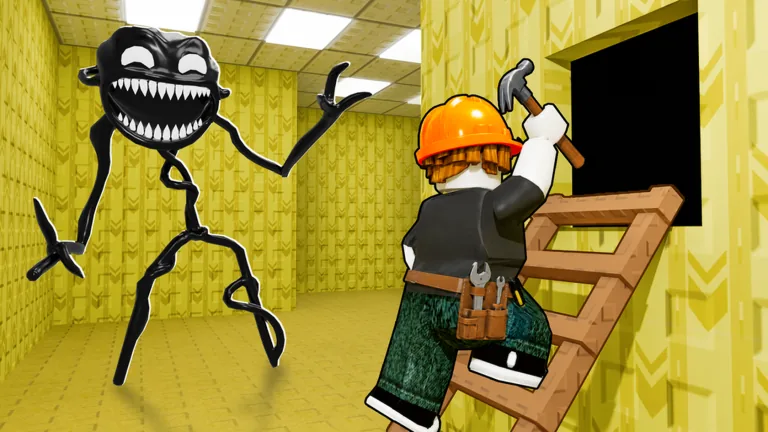
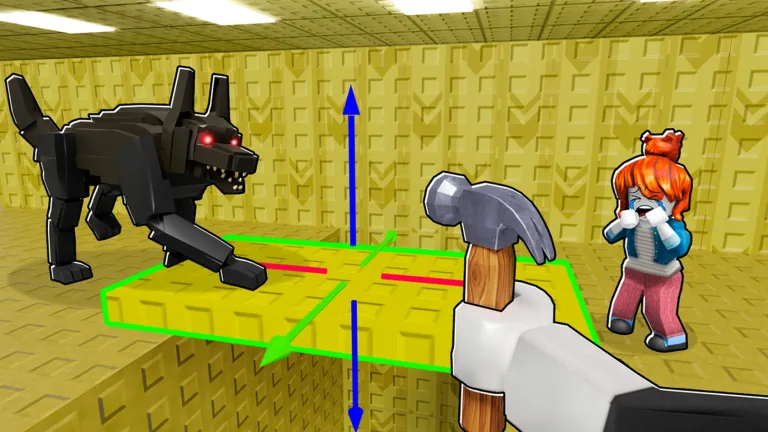
Use the maze view to identify the route before changing monster placement.The monster image identifies the game context; it does not prove a catch rate.The building view supports a compact build-and-retest workflow.
How should I place a monster in Build Your Backrooms?
Build one compact route first, observe the visitor lane, then place one monster on that proven traffic. Retest before adding another piece.
Where should the first monster go?
Start with a corridor, turn, or entrance where visitors already pass and where you can compare more than one run. Avoid an isolated room with no observed traffic.
Does this page list exact monster catch rates?
No. Exact rates, costs, rewards, and offline values stay unverified unless a current, repeatable check supports them.
Is a Backrooms monsters search the same as Build Your Backrooms?
Not necessarily. Broad Backrooms monster queries can refer to lore, films, or other games. This page keeps the intent inside the Roblox experience Build Your Backrooms.
When should monster placement be retested?
Retest after a visible Roblox or in-game change to the description, thumbnail, UI, rooms, visitor movement, monsters, or economy.