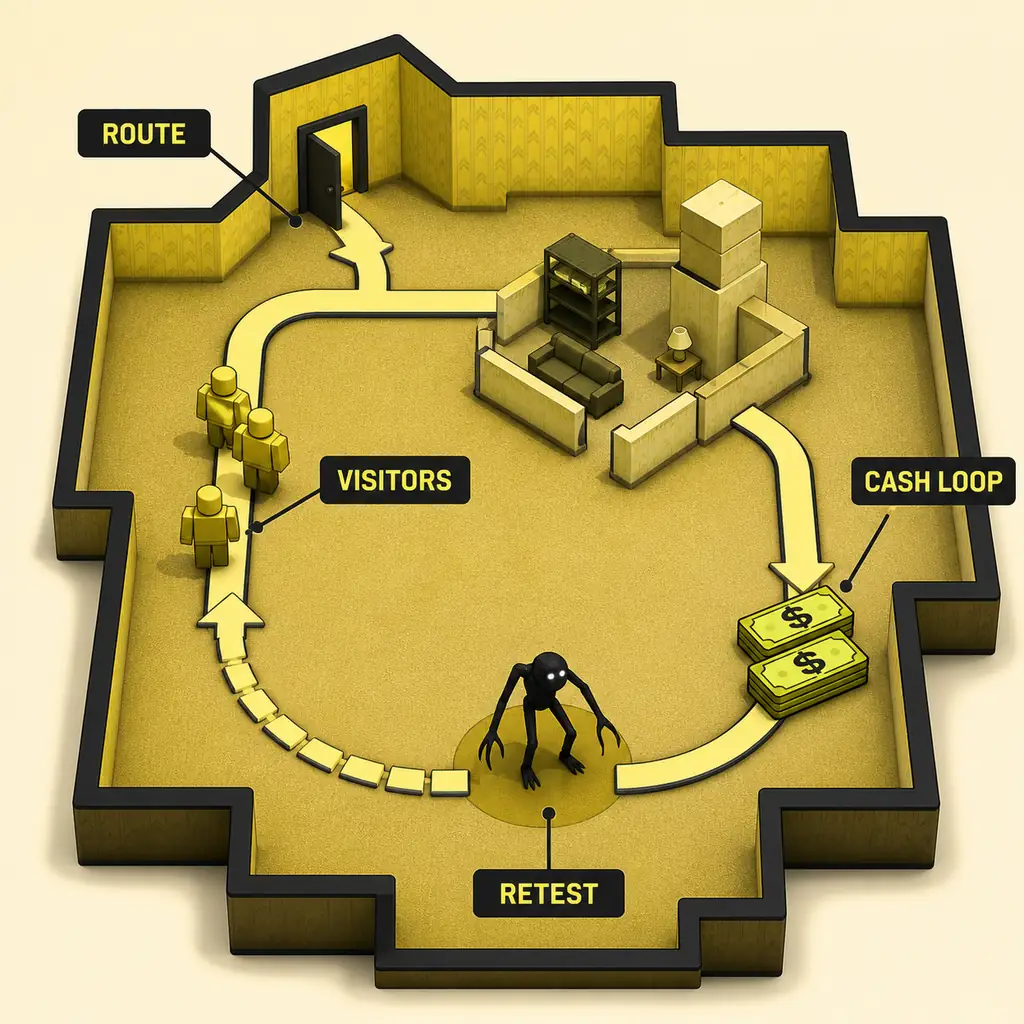
Follow the complete loop from the entrance to visitor movement, cash progression, monster tests, and a controlled retest after change.
Route logicVisitorsCash loopRetest
Quick answer
Build a route that makes the game loop visible
Build Your Backrooms is easiest to understand as a chain: visitors enter a readable route, the route creates progression, and each change should be tested against the same checkpoints. This page explains the relationship without inventing rates or rewards.
Conceptual editorial diagram generated for this guide; it is not gameplay footage or official UI.
Core loop
How Build Your Backrooms works in 5 observable checks
The useful mental model is not a secret formula. It is a repeatable observation loop: start with one readable build, watch visitors, connect the route to progression, test one monster or money change, and retest after a visible update.
Check
Player action
What to observe
1. Route
Make one entrance and one compact path easy to follow.
Visitors enter, choose a lane, and reach a visible checkpoint.
2. Visitors
Watch the same corridor, turn, and branch across more than one pass.
The traffic pattern is repeatable enough to compare.
3. Progression
Notice where the route connects to the next cash or build step.
You can describe what changed without guessing a rate.
4. Test
Move one placement, connection, or monster beside proven traffic.
The test has one main variable and a clear before state.
5. Retest
Repeat the same checkpoints after the next visible game change.
Old advice is kept only when the current route still behaves similarly.
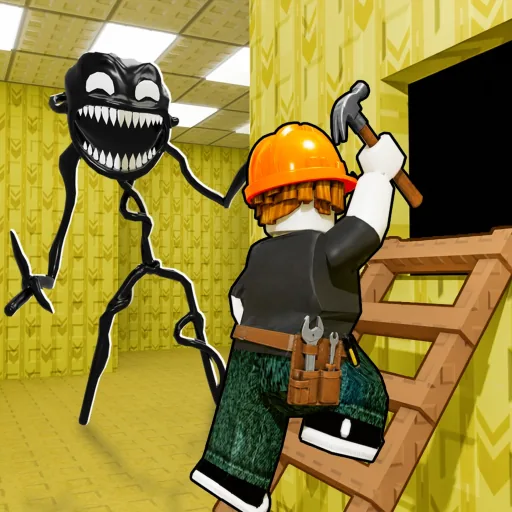
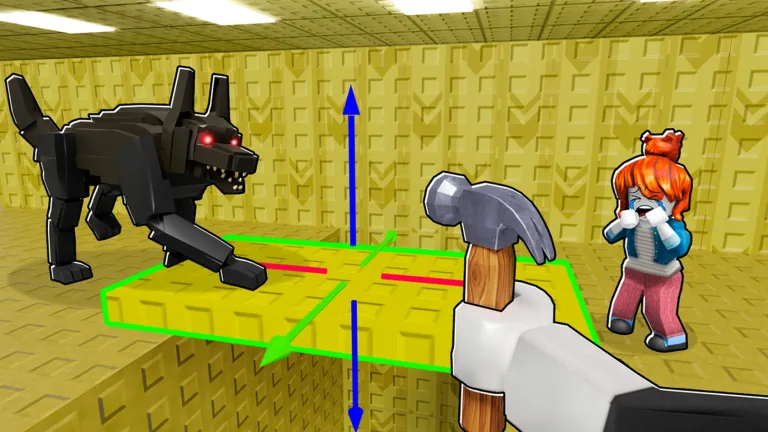
Official Roblox thumbnail used to identify the game context; it is not evidence for an exact mechanic or rate.Signal matrix
Which Build Your Backrooms signal answers which question?
Signal
Question it answers
Best page to continue
Entrance
Do visitors actually enter the build?
Beginner guide
Main lane
Which path carries repeatable traffic?
Guide and monster placement
Cash checkpoint
Does the compact route connect to progression?
Money farm guide
Monster point
Can one placement be tested without extra noise?
Monsters guide
Visible update
Which claim needs a fresh check?
Updates and wiki
Core loop
The short answer: it is a route-and-retest loop
Build Your Backrooms can be read as a building game with a moving visitor path. You make a space, visitors enter or pass through it, and the route gives you the information needed for the next build decision. The safest guide does not start with a supposed perfect layout. It starts with a route that another player can describe: where the entrance is, which corridor is active, where a turn happens, and where the progression signal appears. Once that baseline is visible, you can test one change instead of treating every outcome as a mystery. This is why the page focuses on how the parts relate rather than publishing unsupported cash rates or guaranteed rewards.
Core loop
Read visitor movement before reading the result
Visitors are the most useful early signal because they show whether the build is functioning as a route. A decorative room can look complete while an entrance, split, or blocked connection prevents the intended flow. Watch the same checkpoints more than once: the entrance, the main lane, the first turn, and the point where the route should continue. If visitors never reach the checkpoint, a later monster or cash conclusion is premature. If they split between two branches, simplify the test before expanding. The beginner guide covers the first compact route; this page adds the reasoning for why that route is a useful baseline.
Core loop
Rooms are route decisions, not a checklist of decoration
A room matters when it changes how visitors move or what you can observe. A narrow corridor may make traffic obvious, while an extra branch can dilute the pattern and make a slow run difficult to diagnose. Treat each new connection as a question: does it help visitors reach the intended checkpoint, or does it add another explanation for the same result? This does not mean every build should be small forever. It means the first version should be easy to compare. The wiki is the right place to record a room or building fact once it has a source or a repeatable player check.
Core loop
The cash loop is a progression signal, not a promise of income
Money-related searches often ask for a fastest farm or an exact rate, but a single observation cannot support a universal number. Use the cash point as a signal that the route is producing the next progression step, then compare the same route after one deliberate change. Record what you actually saw: whether visitors entered, whether the loop repeated, and whether the next step appeared. Do not turn a lucky reward into cash per minute without a current method and stable conditions. The money-farm guide handles this narrower test; the mechanics page explains where it sits in the wider loop.
Core loop
A monster is a test variable, not an automatic solution
Monster placement makes sense after the route has visible traffic. If a monster is placed in an empty or untested room, a poor result could come from the route rather than the placement. First identify a corridor, turn, or entrance that visitors already use. Then change one monster position while leaving the rest of the route stable. Compare more than one pass and note the date or game state. Exact catch rates, rewards, and costs remain unverified here unless a current repeatable check supports them. The monster guide covers placement details; this page explains why placement belongs after the traffic baseline.
Core loop
Updates change the evidence boundary
A route note can become stale when the Roblox experience changes its rooms, interface, visitor movement, monsters, economy, description, or thumbnail. A visible change is a retest trigger, not proof that the new behavior is known. Rebuild the smallest baseline, watch the same checkpoints, and update only the claim that the new evidence supports. Keep uncertain values marked for retest instead of copying an old screenshot into a new rule. The updates page records the trigger, while the wiki can preserve the field and its verification status. This separation helps the site stay useful without pretending that one old run describes every current player.
Visual evidence
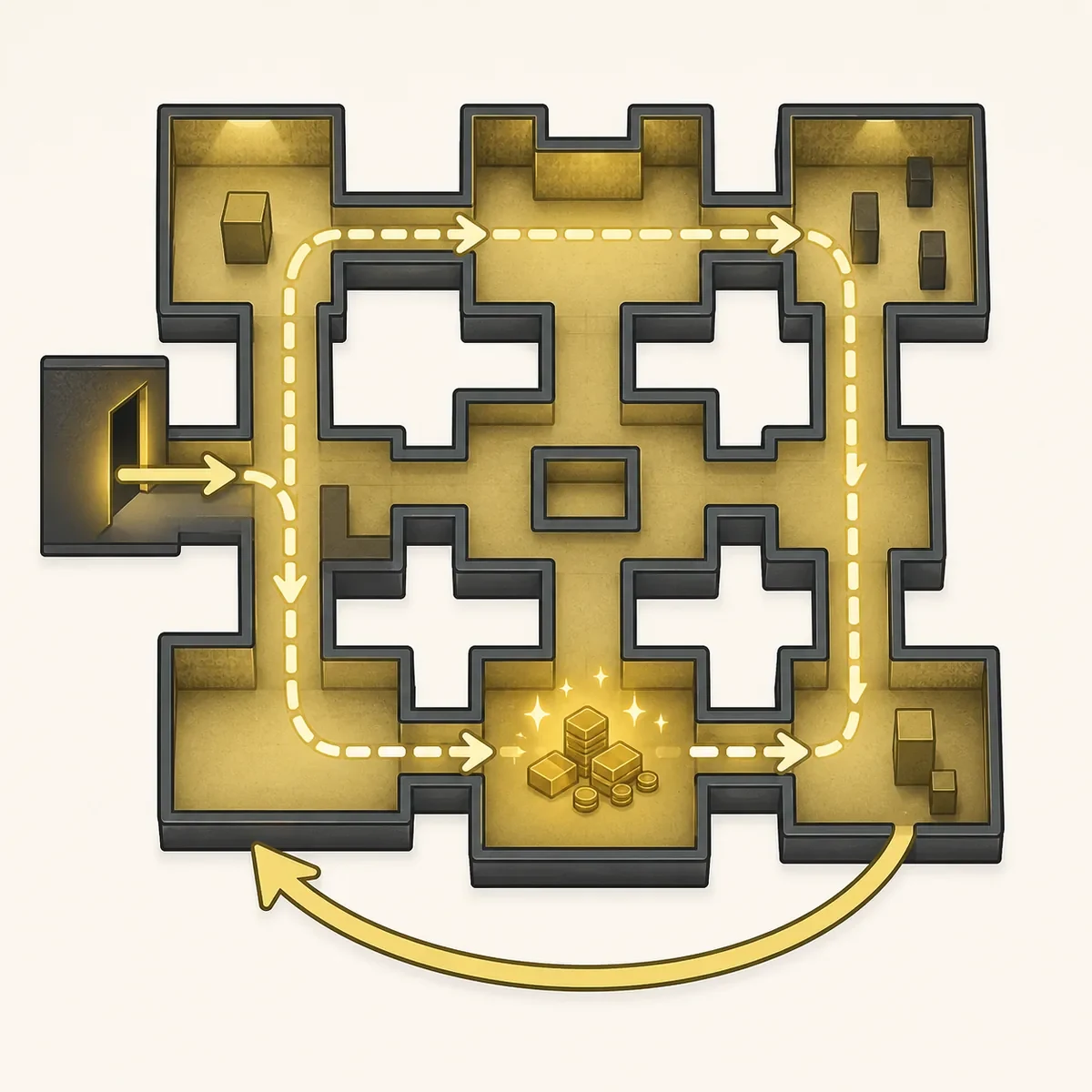
Use three visual points to read the loop
Editorial illustration, not official gameplay: a compact loop makes visitor checkpoints and a cash signal easier to compare.
How does Build Your Backrooms work for a new player?
Start with one compact route. Confirm that visitors enter and repeat the main lane, then use the cash or build progression as a signal before adding branches or a monster.
What should I build first in Build Your Backrooms?
Build the smallest entrance-to-loop path that lets you see visitor movement. The beginner guide then helps you turn that baseline into a safer first maze.
How do visitors affect the Build Your Backrooms route?
Visitors reveal whether a corridor, turn, or branch is actually being used. Watch the same checkpoints across several passes before deciding that a layout works.
Is there a guaranteed Build Your Backrooms money rate?
This page does not claim one. Exact rates and rewards need a current, repeatable in-game check with stated conditions; a lucky single run is not enough.
Where should I test a monster?
After you can see repeatable visitor traffic, test one monster near a corridor, turn, or entrance that visitors already use. Keep the rest of the route stable.
When should Build Your Backrooms advice be retested?
Retest after a visible change to rooms, UI, visitor movement, monsters, economy behavior, description, or other Roblox metadata that could affect the route.